Flat Roof Safety, Wind Loads and Solar: Complete Guide
A flat roof must be watertight, safe to access, resistant to wind and suitable for any proposed solar installation. This guide brings together fall protection, roof wind zones, structural capacity and PV mounting
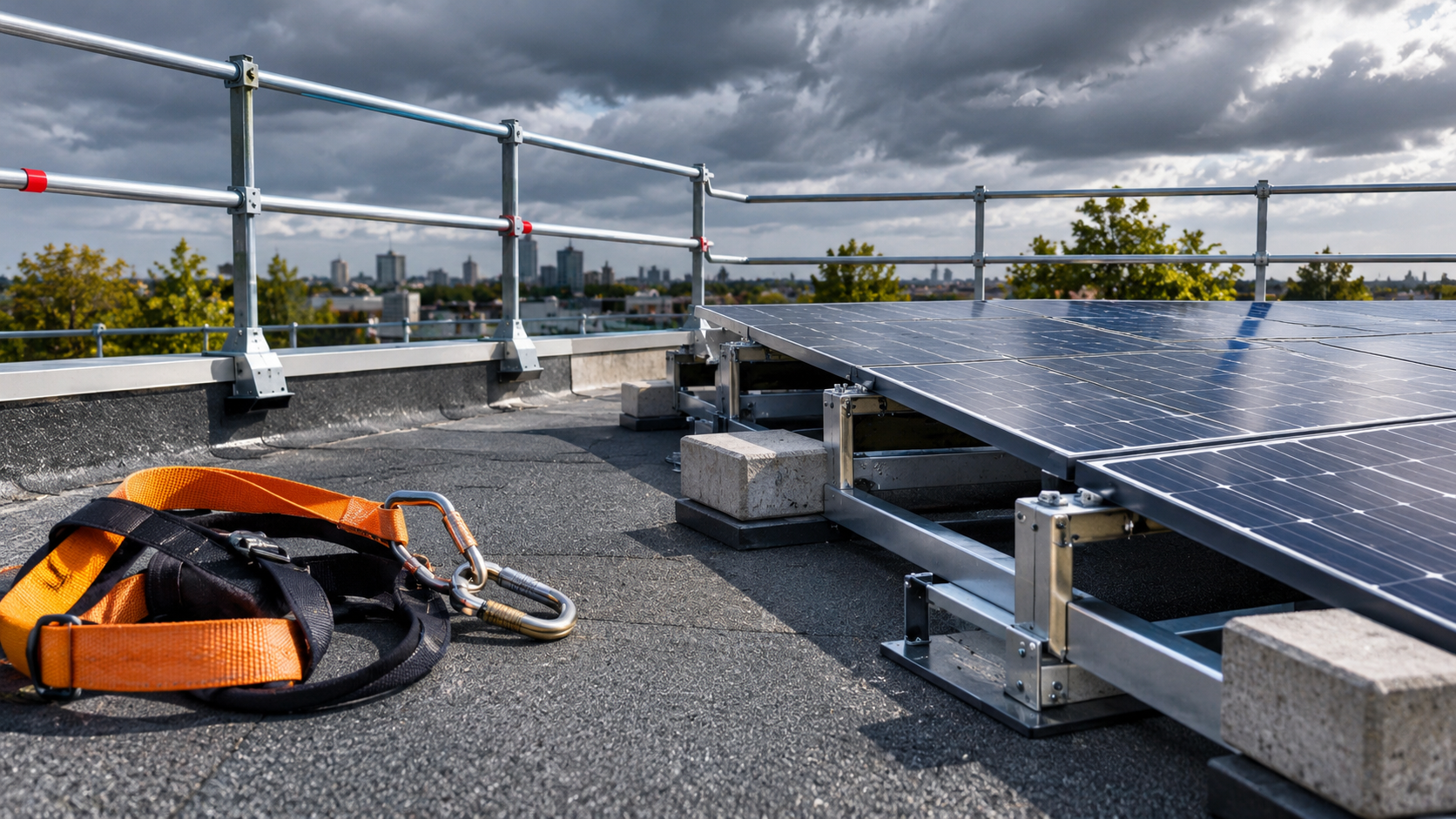
FLAT ROOF · SAFETY, WIND & SOLAR
A flat roof must be watertight, safe to access, resistant to wind and suitable for any proposed solar installation. This guide brings together fall protection, roof wind zones, structural capacity and PV mounting considerations.
Start with a safe roof survey, including edges, openings, deck capacity, drainage and membrane condition. Obtain qualified wind, fixing and solar-ballast designs before estimating materials, labour or installation stages.
Survey hazards before access
Identify roof edges, skylights, fragile openings, traffic below and safe access routes. Dutch safety requirements can apply below a 2.5 m height difference when fall risk exists.
Read safe working on flat roofs and risk assessment planning. Arboportaal prioritizes eliminating hazards and collective controls over personal fall protection.
Understand wind zones and attachment
Wind suction varies across corner, perimeter and central roof zones. Building height, surrounding terrain and roof geometry determine the relevant design.
See wind load design and roof wind zones. The applicable Eurocode framework and Dutch provisions need to be checked.
A blanket five fasteners per m² is not an engineering design.
Assess solar weight and ballast
PV panels add mounting equipment, possible ballast and local support loads. Wind action, water drainage and existing deflection must be considered.
RVO recommends structural assessment, particularly for light timber and steel roofs. See the solar guide, ballast and roof capacity.
Keep waterproofing and drainage sound
PV supports require compatible membrane protection and approved pressure distribution. Maintain access to outlets and inspections while controlling cables and point loads.
Dutch IPLO guidance addresses water accumulation and emergency drainage risks on lightweight roofs. Read membrane protection and PV inspection.
Prepare approved project records
Collect drawings, structural and wind reports, hazard controls, supplier instructions, responsibilities and maintenance terms before ordering.
Use roofing work preparation and project schedules alongside supported DakCalc estimates.
Build a traceable roofing estimate
Use supported DakCalc tools for roof quantities and costs. DakCalc does not certify wind loads, solar ballast, structural capacity or fall-protection plans; these require appropriate qualified design and verification.
Open DakCalc →Related safety and solar guides
Also see: roofing work preparation · flat roof calculations.
Frequently asked questions
Can I work unprotected on a low roof?
Not when a fall hazard remains. Dutch protective measures may apply below 2.5 m.
Does DakCalc calculate certified solar ballast?
No. PV ballast requires system-specific engineering and structural checks.
Must a structural engineer assess PV installations?
Structural suitability must be established; RVO highlights specialist checks particularly for light roofs.
Sources and standards
- Arboportaal — Werken op hoogte
- Arboportaal — Wettelijke maatregelen tegen valgevaar
- RVO — Geschikte daken voor zonne-energie
- RVO — Veiligheid en verzekerbaarheid zonnepanelen
- IPLO — Noodafvoer en wateraccumulatie
- NEN 7250:2021 — Bouwkundige aspecten zonne-energiesystemen
- NEN-EN 1991-1-4:2026 — Eurocode windbelasting (controleer toepasselijke Nederlandse normeditie)
This guide is informational, not engineering approval or a safety instruction. Confirm applicable standards and national annexes, structural design, manufacturer installation guidance, site risk assessment and insurer requirements.