Flat Roof Repairs: Complete Practical Guide
A reliable flat-roof repair starts with diagnosis, not simply welding a patch over the visible stain. This practical guide helps roofing contractors record defects, assess the existing build-up, choose a proportionate
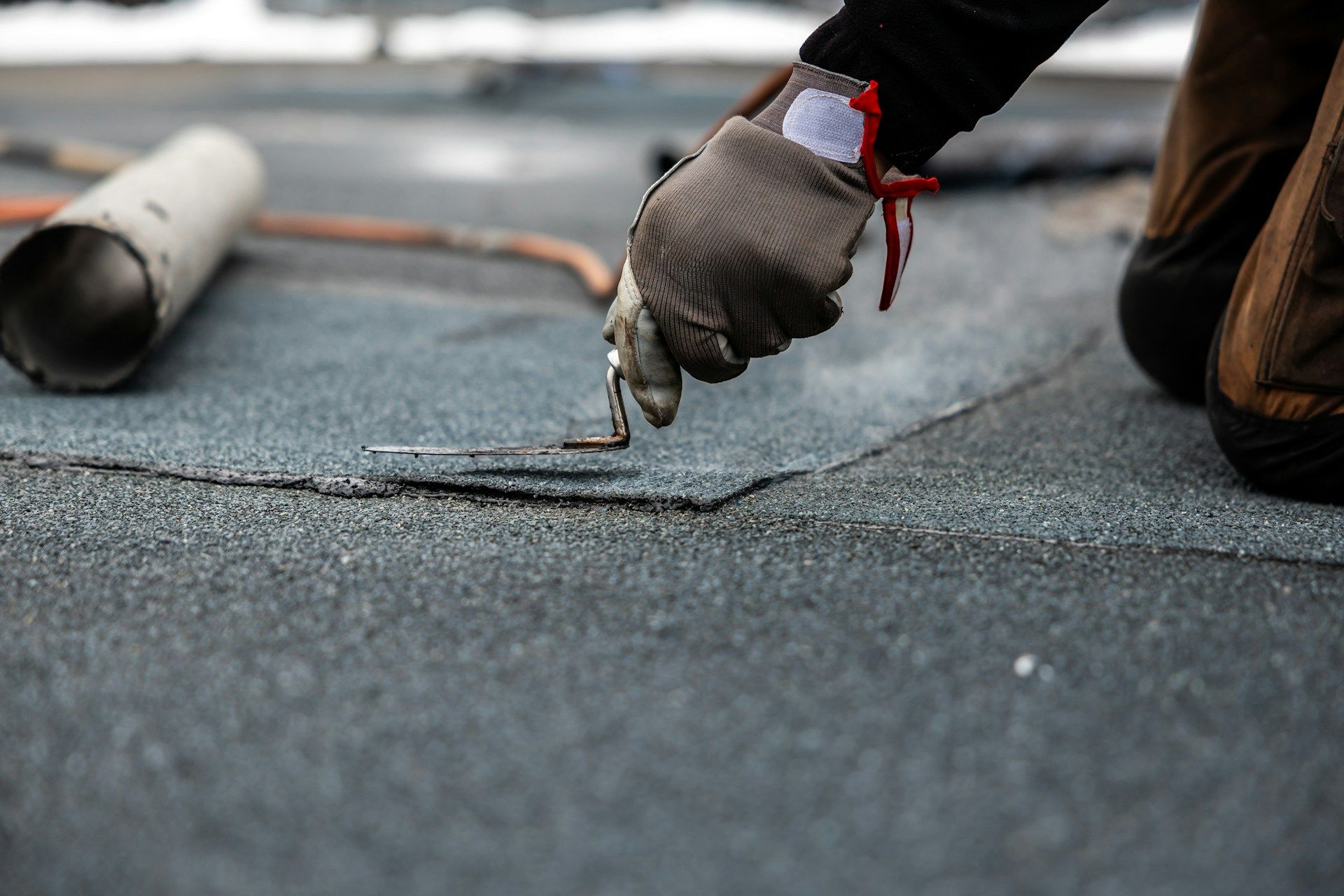
FLAT ROOFS · REPAIR & LEAKS
A reliable flat-roof repair starts with diagnosis, not simply welding a patch over the visible stain. This practical guide helps roofing contractors record defects, assess the existing build-up, choose a proportionate intervention and prepare a traceable estimate.
Inspect leaks, open seams, blisters, cracks, drains, upstands and wall junctions first. Confirm the roof is suitable for localized repair before deciding on a patch, overlay or replacement. Schedule materials, labour, access and safe working measures separately.
Survey the defect before choosing a patch
Start with the customer’s description, weather history and photographs of internal damp patches. Water can travel through layers and along structural elements, so the mark indoors does not necessarily locate the defect above.
Where access is safe, inspect seams, blisters, cracks, outlets, penetrations, parapets, edge trims and wall flashings. Record positions on a roof sketch and identify locations requiring further investigation.
Do not work on an unsafe wet or windy roof; active water near electrics requires urgent professional attention.
Differentiate symptoms from the underlying cause
A separated lap can provide a direct water path, while blisters or folds may indicate bonding or moisture issues. A blister by itself does not prove a leak. Assess surrounding roof condition before deciding on a repair.
See the flat-roof leak investigation guide and bitumen repair methods to match the work to the observed defect.
Decide between localized work and larger repairs
A local repair can be appropriate where the adjacent membrane is sound and the water path has been established. Extensive cracking, wet insulation, failed adhesion or unsuitable details can require a more extensive repair or reconstruction.
Review overlay versus replacement against the actual roof build-up, moisture condition, height restrictions, roof load and the selected system specifications.
Measure the work, not just the roof area
Count repair locations, measure seam and edge runs, and record the membrane area to be repaired. Allow separately for cleaning, access, preparation, safety measures and labour. A 1 m² defect will rarely use only exactly 1 m² of ordered membrane.
Separate consumed quantities from existing stock and purchased roll or pack quantities. See the roof repair estimating guide.
Use actual detail dimensions and manufacturer lap requirements rather than one generic price per m².
Record a defensible outcome
Specify the inspected area, confirmed defects, planned method, exclusions and a contingency when opening the roof could reveal hidden moisture or damage.
Prepare a repair quotation and close the job with a repair work order recording photographs, materials, hours and checks.
From roof inspection to a clear job record
Record the job, materials and labour; verify the repair specification and costs before work starts.
Explore DakCalc →More flat roof repair guides
For roof material calculations: the DakCalc technical guide.
Frequently asked questions
Can every leak be fixed with one membrane patch?
No. The leak pathway, trapped moisture and the roof condition must be checked first.
Does every bitumen blister require cutting open?
No. The decision depends on the roof system, location and condition.
Is overlaying always cheaper than replacement?
Not necessarily; preparation, moisture, extra load and junction changes may rule it out.
Sources and further reading
Inspection and costing are indicative. Check the roof build-up, moisture, adhesion, wind resistance and fire safety for each project against the relevant system instructions.