Flat Roof Systems: Compare EPDM, PVC and Bitumen
Selecting a flat roof membrane is not simply a price-per-square-metre decision. EPDM, PVC and bitumen differ in material properties, jointing, attachment methods, interface details and installation requirements. This
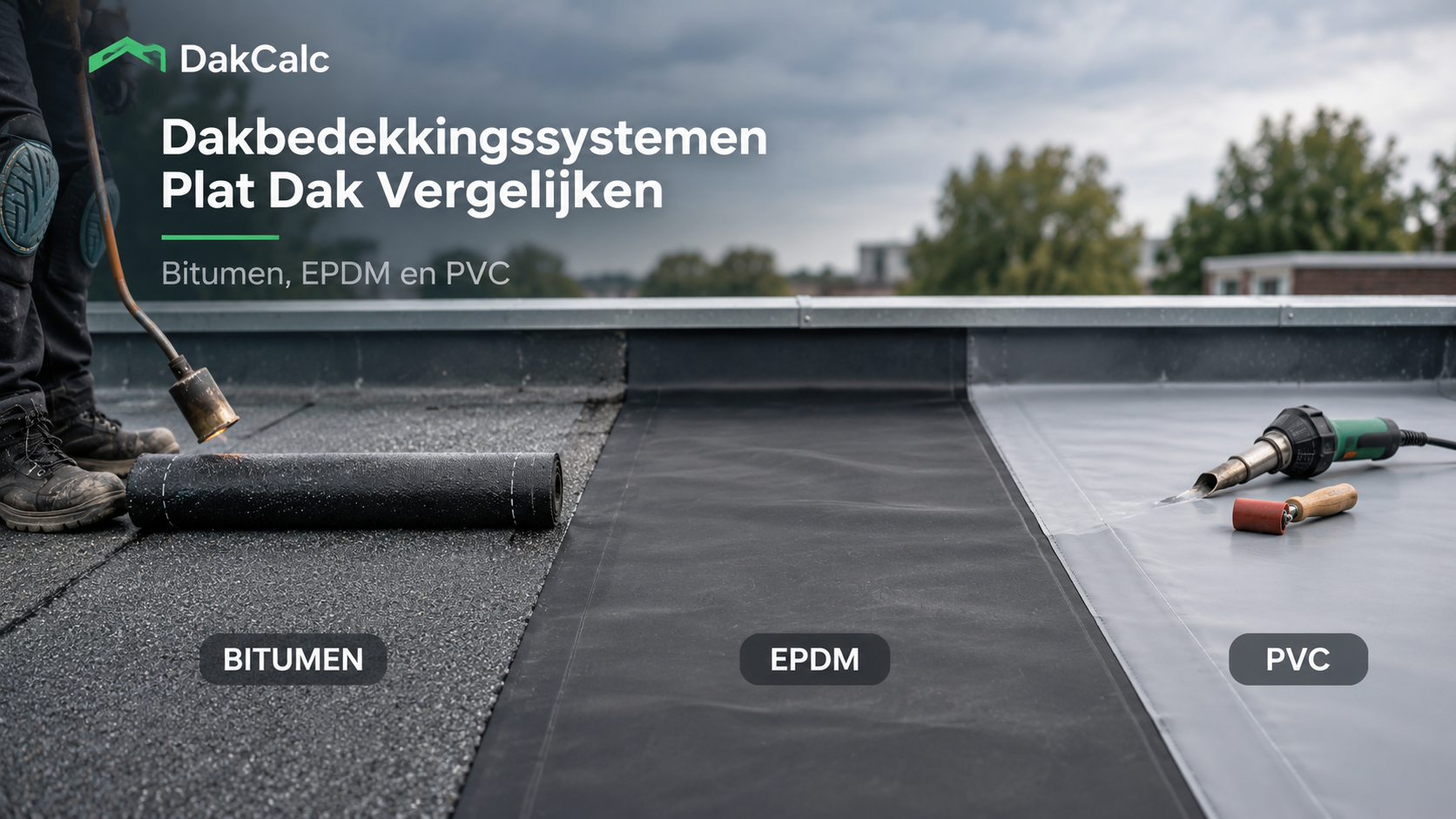
ROOF MEMBRANE SYSTEMS · EPDM, PVC & BITUMEN
Selecting a flat roof membrane is not simply a price-per-square-metre decision. EPDM, PVC and bitumen differ in material properties, jointing, attachment methods, interface details and installation requirements. This guide compares complete roofing systems for contractors.
Compare the complete roof build-up, substrate, insulation, wind design, fire precautions, edge details, labour and maintenance. EPDM is synthetic rubber; PVC is a thermoplastic membrane; APP and SBS are modified bitumen systems. Never assume adhesives, lap details or fixings are interchangeable.
Start with the complete roof assembly
Review deck, vapour control, insulation, drainage falls, wind zones and required junction heights before choosing a membrane. The waterproofing layer is only one part of the assembly.
A heavily detailed refurbishment differs from an unobstructed new roof. See flat roof renovation planning for existing-layer assessments.
EPDM: elastic rubber with specified seams
EPDM is a flexible synthetic rubber system. Depending on product, it may use larger sheets and designated bonding, seam tapes, factory-formed elements or other approved joins.
See the EPDM guide and the exact datasheet to determine whether the specified assembly is adhered, mechanically attached or ballasted.
PVC: thermoplastic membrane and welded joints
Compatible PVC sheets are joined using appropriate heat-welding methods. Separation layers and attachment strategy depend on the substrate and the selected system.
The PVC guide explains rolls, seam inspection, wind design and detailing without inventing universal heat settings.
Bitumen: APP and SBS membrane assemblies
Bituminous roof assemblies rely on specified layers, suitable bonding or fixing, laps and junction design. Do not transpose a PVC joint onto a bitumen detail.
Our existing guides APP versus SBS and calculating bitumen materials cover those aspects separately.
Compare total installed and service costs
Assess purchasing, effective coverage, installation time, access, safety, complex junctions and maintenance. The lowest nominal roll cost may not be the lowest life-cycle cost.
Use system costing and maintenance comparisons.
Product service-life estimates are not site-specific guarantees.
Estimate roof area and costs; verify the selected roof system
Use DakCalc where its current roof area, material and cost tools match the job. Adhesive rates, welded seam details and wind-uplift fixing layouts are not automatically certified DakCalc designs; use manufacturer data and project-specific specifications.
Open DakCalc →More membrane system guides
See also: APP versus SBS bitumen, roof edge trims for EPDM, PVC and bitumen.
Frequently asked questions
Is EPDM always superior to PVC?
No. The right system depends on the roof, environment, installation method and product data.
Is PVC the same as bitumen?
No. PVC is a thermoplastic sheet; bitumen membranes have different materials and installation specifications.
Does DakCalc certify EPDM or PVC details?
No. Use its applicable estimating features and verify actual roof specifications separately.
Sources and references
Calculations and service-life comparisons are indicative. Verify the selected product, chemical compatibility, installation requirements, fire safety, wind resistance and roof construction; examples are not approved specifications.